HSBC: Vietnam Actively Promotes Digital Transformation, Demonstrating Economic Resilience

Nov 4, 2025 By

In the heart of Southeast Asia, Vietnam is quietly orchestrating one of the most remarkable economic transformations of our time. According to recent analyses by HSBC, the nation's aggressive push toward digitalization is not merely a technological upgrade but a fundamental reshaping of its economic DNA. While global supply chains faltered and economies worldwide grappled with uncertainty, Vietnam demonstrated a resilience that caught many observers by surprise. This resilience, HSBC notes, is deeply intertwined with the country's digital ambitions, creating a virtuous cycle where technological adoption fuels economic stability, which in turn enables further digital investment.


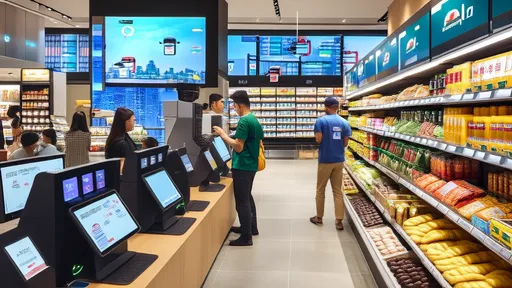
The story begins not in boardrooms or government offices, but in the bustling streets of Hanoi and Ho Chi Minh City, where QR code payments have become as commonplace as motorbikes. What started as a convenience for urban consumers has evolved into a nationwide financial revolution. The State Bank of Vietnam reports that digital transactions grew by an astonishing 85% in the past year alone, with mobile payment value increasing nearly threefold. This isn't just about replacing cash—it's about creating an entirely new financial ecosystem that connects previously unbanked populations to the formal economy. The implications are profound: small businesses can access credit, farmers can receive payments directly, and households can participate in e-commerce in ways that were unimaginable just five years ago.


Behind this consumer-facing transformation lies a deeper, more systematic overhaul of Vietnam's industrial backbone. Manufacturing, which accounts for nearly 25% of GDP, is undergoing what industry insiders call "Industry 4.0 with Vietnamese characteristics." Factories that once competed on cheap labor alone are now integrating IoT sensors, AI-powered quality control, and blockchain-enabled supply chain management. The results speak for themselves: despite global disruptions, Vietnam's manufacturing output grew by 7.2% last quarter, while export values reached record highs. This isn't accidental—it's the product of deliberate policy and private sector innovation working in concert.


The government's role in this transformation cannot be overstated. When the Prime Minister launched the National Digital Transformation Program in 2020, many viewed it as another bureaucratic initiative. Instead, it has become the driving force behind Vietnam's technological leap. The program established clear targets: digital economy to contribute 30% to GDP by 2030, broadband internet covering all households, and 100% of public services available online. What's remarkable isn't the ambition of these goals, but the speed of their implementation. Already, over 70% of population has regular internet access, and more than 2,000 public services have been digitized. The bureaucracy that once required multiple in-person visits now handles many procedures through a single digital portal.


Foreign investment has played a crucial role in accelerating this transformation. While many know Vietnam as a manufacturing hub for electronics and textiles, it's increasingly becoming a destination for tech investment. Samsung alone has poured over $17 billion into Vietnam, creating not just assembly lines but R&D centers that employ thousands of Vietnamese engineers. Intel's largest semiconductor packaging facility globally operates in Ho Chi Minh City, while Google recently announced plans to open its first data center in Southeast Asia—in Vietnam. These investments bring more than capital; they transfer knowledge, create high-skilled jobs, and integrate Vietnam into global tech ecosystems.


Perhaps the most telling indicator of Vietnam's digital maturity is the emergence of homegrown tech unicorns. Companies like VNG, Momo, and Tiki have evolved from startups to industry leaders, developing solutions tailored to local needs while competing with global giants. MoMo, Vietnam's leading e-wallet, now processes more transactions than many regional banks, serving over 30 million users. What's particularly interesting is how these companies are expanding beyond their initial domains—MoMo now offers insurance and investment products, while VNG has moved from gaming to cloud services. This evolution suggests a digital ecosystem reaching critical mass, where success in one sector fuels innovation in others.


The human dimension of this transformation is equally compelling. Vietnam's young population—over 70% under age 35—has embraced technology not as a novelty but as an essential tool for advancement. University enrollment in STEM fields has doubled in the past decade, while coding bootcamps and digital skills training have become growth industries in their own right. This isn't just about creating programmers; it's about building a workforce capable of thriving in a digital economy. The results are visible in everything from agricultural apps that help farmers optimize crop yields to telemedicine platforms that connect rural patients with urban specialists.


Yet challenges remain, and they're not insignificant. The digital divide between urban and rural areas, while narrowing, still persists. Cybersecurity concerns have grown alongside digital adoption, with the National Cyber Security Center reporting a 40% increase in attacks last year. Regulatory frameworks sometimes struggle to keep pace with technological change, creating uncertainty for investors. And perhaps most fundamentally, there's the question of whether this rapid transformation can be sustained without creating new forms of inequality or environmental damage.


Looking ahead, Vietnam's digital journey appears poised for its next chapter. The government's recent approval of a strategy for AI development by 2030 signals that the country isn't resting on its laurels. Meanwhile, the ongoing US-China trade tensions have positioned Vietnam as an attractive alternative for companies seeking to diversify their supply chains. But the real test will be whether Vietnam can move from adopting technology to creating it—from implementing solutions developed elsewhere to pioneering innovations that address global challenges.


What makes Vietnam's case particularly instructive for other developing economies is its holistic approach. This isn't just about building tech parks or passing digital laws—it's about creating an entire ecosystem where infrastructure, education, regulation, and entrepreneurship reinforce each other. The results, as HSBC's analysis suggests, speak for themselves: an economy that grew at nearly 8% last year despite global headwinds, with digital sectors among the fastest-growing components. In an era of uncertainty, Vietnam's digital transformation offers a compelling case study in how technological adoption, when combined with sound economic policies and social readiness, can build not just efficiency but genuine resilience.


Recommend Posts
Business

Shop in China" Consumption Month Connects with CIIE to Stimulate Goods and Services Consumption Market

By /Nov 4, 2025

China's consumer market is experiencing a remarkable transformation as the government's "Shopping in China" campaign converges with the China International Import Expo, creating unprecedented momentum in both goods and services consumption. This strategic alignment represents a sophisticated approach to economic revitalization that goes beyond traditional stimulus measures, weaving together international trade with domestic consumption in a way that benefits both local consumers and global businesses.
Business

Hanoi Develops One Village, One Product", Handicraft Village Products Go Global through Expo

By /Nov 4, 2025

In the heart of Vietnam's capital, a quiet revolution is taking place that promises to reshape the economic landscape of rural communities while bringing unique cultural treasures to the global stage. Hanoi's implementation of the "One Commune, One Product" (OCOP) program has transformed from a local development initiative into an international phenomenon, with traditional craft village products now finding their way to international exhibitions and capturing the imagination of consumers worldwide.
Business

Thailand and Five Other Countries Serve as Guest Countries at the CIIE, Global South" Issues Included in the Hongqiao Forum for the First Time

By /Nov 4, 2025

Thailand stood proudly alongside five other nations as Guest of Honor at the China International Import Expo (CIIE), a position that carried profound symbolic weight far beyond the glittering exhibition halls of Shanghai. This year's edition of the world's premier import-themed expo was not merely a trade fair; it was a strategic stage for the growing chorus of the "Global South." For the first time, the prestigious Hongqiao Forum, the intellectual core of the CIIE, formally integrated the "Global South" as a central theme, marking a pivotal shift in the discourse surrounding global economic governance. The convergence of these two events—the high-profile participation of key developing economies and the forum's thematic focus—sent an unambiguous message: the economic and political cartography of the world is being redrawn, and institutions like the CIIE are becoming crucial platforms for this realignment.
Business

Vietnam's Retail Sector Embraces Modernization as Companies Race to Digital Transformation

By /Nov 4, 2025

Vietnam's retail landscape is undergoing a profound transformation, shifting from traditional wet markets and small family-owned stores toward a modern, dynamic sector driven by digital innovation. This evolution is not merely a trend but a strategic response to changing consumer behaviors, increased internet penetration, and fierce market competition. As the country's economy continues to grow, both domestic and international retailers are racing to implement digital solutions to capture market share and enhance customer experiences.
Business

Henan FTZ Zhengzhou Area Plans to Sign an Agreement with Chile's Free Trade Zone to Promote High-Level Opening-Up

By /Nov 4, 2025

In a significant move to deepen international economic ties, the Zhengzhou Area of the China (Henan) Pilot Free Trade Zone is poised to sign a landmark cooperation agreement with a Chilean free trade zone. This initiative marks a pivotal step in China's broader strategy to foster high-level opening-up and strengthen global trade partnerships. The collaboration, which focuses on leveraging complementary strengths, is expected to enhance trade flows, investment opportunities, and economic resilience between the two regions.
Business

Longcheng International Airport's Airport Commissioning Flight Successfully Completed, A Key Step in Vietnam's Aviation Infrastructure Development

By /Nov 4, 2025

The skies above Long Thanh witnessed a historic moment this Tuesday as the calibration flight for Vietnam's most ambitious aviation project concluded with resounding success. Against the backdrop of morning mist clearing over the unfinished terminals, the specialized aircraft completed its final approach, marking what aviation experts are calling a watershed moment for Southeast Asian infrastructure development.
Business

Vietnam Autumn Expo Success Reflects Strategic Leap in Trade Promotion Policies

By /Nov 4, 2025

The vibrant halls of Hanoi's National Convention Center echoed with the sounds of commerce and collaboration during the recent Vietnam Autumn Expo, an event that has come to symbolize far more than a simple trade fair. This year's edition, sprawling and ambitious, served as a powerful testament to a fundamental shift in Vietnam's economic statecraft. Observers and participants alike noted that the expo was not merely a marketplace, but a strategic statement—a clear signal that Vietnam's trade promotion policies have undergone a profound and calculated evolution, moving from reactive measures to a proactive, forward-looking national strategy.
Business

China's Digital Finance Unicorn List 2025" Released, Over 40% of Companies Gather in Beijing

By /Nov 4, 2025

Beijing has solidified its position as the undisputed capital of China's digital finance sector, with over 40 percent of the nation's most valuable fintech unicorns now calling the city home, according to the newly released China Digital Finance Unicorn List 2025. The comprehensive industry report reveals a remarkable concentration of financial technology innovation and capital within China's political and cultural center, highlighting a significant geographic shift in the country's technological power dynamics.
Business

Vietnamese Fruit and Vegetable Exports Expected to Surpass $10 Billion, with China as a Key Driver

By /Nov 4, 2025

Vietnam's agricultural sector is witnessing a remarkable transformation as its fruit and vegetable exports surge toward an unprecedented milestone. Industry analysts and government officials project that the country's produce exports will breach the $10 billion threshold this year, marking a significant achievement for a nation traditionally known for its rice and coffee exports. This remarkable growth trajectory represents more than just numbers—it signifies Vietnam's evolving position in global agricultural trade and its successful diversification into high-value export commodities.
Business

Beijing Unveils Policies to Facilitate the Full Venture Capital Chain: Raising, Investing, Managing, and Exiting

By /Nov 4, 2025

Beijing has unveiled a comprehensive series of policies aimed at streamlining the entire venture capital lifecycle, from fundraising to exit strategies. The ambitious initiative seeks to transform China's capital into a global hub for innovation and technological investment, addressing long-standing bottlenecks that have hampered the growth of startups and venture capital firms alike.
Business

CIIE Becomes Global Innovation Testbed, Low-Altitude Economy and AI Lead the Future Industries

By /Nov 4, 2025

The sprawling exhibition halls of the China International Import Expo (CIIE) in Shanghai have transformed into more than just a marketplace for global goods; they have evolved into a dynamic, real-world laboratory where the future of industry is being stress-tested before a global audience. This year's event has firmly established itself as the world's premier testing ground for innovation, with two technological frontiers—low-altitude economy and artificial intelligence—emerging not as distant concepts, but as tangible, integrated systems poised to redefine our economic and social fabric.
Business

Financial Street and Casablanca Finance City Sign MOU to Deepen Green Finance Cooperation

By /Nov 4, 2025

In a landmark move that signals growing international cooperation in sustainable finance, Beijing's Financial Street and Casablanca Finance City have signed a comprehensive memorandum of understanding to deepen their collaboration in green financial initiatives. The agreement, finalized during high-level talks between Chinese and Moroccan financial authorities, establishes a framework for knowledge sharing, joint research, and market development in environmentally conscious investment practices.
Business

Catering to New Consumer Trends, CIIE Introduces New Themes of Silver Economy and Winter Sports Economy

By /Nov 4, 2025

The China International Import Expo (CIIE), the world's first import-themed national-level exhibition, has consistently demonstrated its ability to evolve with changing global economic landscapes. This year's edition marks a significant strategic pivot as organizers deliberately incorporate two emerging economic sectors - silver economy and ice-snow economy - into its core framework. This move represents more than mere thematic expansion; it signals a profound understanding of how global consumption patterns are transforming and how international trade must adapt accordingly.
Business

Hanoi Attracts Nearly $4 Billion in Foreign Investment in the First 10 Months, Demonstrating International Market Appeal

By /Nov 4, 2025

Hanoi's economic landscape continues to demonstrate remarkable resilience and appeal as the capital city recorded nearly $4 billion in foreign direct investment during the first ten months of this year. The impressive figures come amid global economic uncertainties and shifting supply chains, positioning Vietnam's capital as an increasingly attractive destination for international capital.
Business

Financial Street Forum Annual Meeting Contributes to Global Governance, China's Financial Opening Attracts the World

By /Nov 4, 2025

Beijing's Financial Street Forum has concluded with a powerful message about China's commitment to global economic governance and financial market liberalization. The annual gathering, which brought together central bankers, finance ministers, and financial institution leaders from around the world, served as a platform for China to articulate its vision for a more inclusive global financial architecture while demonstrating concrete steps toward opening its financial sector.
Business

Phạm Minh Chính: Vietnam is determined to put the International Financial Center into operation in November.

By /Nov 4, 2025

Prime Minister Pham Minh Chinh has declared Vietnam's unwavering determination to launch its first international financial center by November, marking a pivotal moment in the country's economic transformation. The announcement came during a high-level government meeting where the Prime Minister emphasized the strategic importance of this project for Vietnam's long-term development and global economic integration. This ambitious initiative represents the culmination of years of planning and preparation, positioning Vietnam to compete with established financial hubs in the region.
Business

Nearly 450,000 Professional Visitors Registered for CIIE, 43 Trading Delegations Ready for Negotiations and Procurement

By /Nov 4, 2025

The China International Import Expo (CIIE) has once again captured global attention with staggering participation numbers, signaling a robust revival in international trade engagement. With nearly 450,000 professional attendees registered and 43 procurement delegations poised for negotiations, the event stands as a testament to China's pivotal role in shaping post-pandemic economic recovery. The scale of participation not only shatters previous records but also reflects a collective international appetite for market connectivity and commercial collaboration. Against the backdrop of geopolitical uncertainties and supply chain recalibrations, these figures emerge as a powerful counter-narrative to trade fragmentation fears, positioning the expo as a critical nexus for global business dialogue.
Business

CIIE Fosters Mutual Benefit Amid Uncertainty, China Ready to Share Global Market Pie with All Parties

By /Nov 4, 2025

The sprawling exhibition halls of the National Exhibition and Convention Center in Shanghai hummed with a distinct energy this year, a palpable sense of forward momentum against a backdrop of global economic headwinds. The China International Import Expo (CIIE), now a firmly established fixture on the international trade calendar, positioned itself not merely as a marketplace, but as a powerful statement of intent. In an era marked by supply chain disruptions, inflationary pressures, and a creeping tide of protectionist sentiment, the message emanating from Shanghai was one of resolute openness and collaborative growth. The central theme, "Joining Hands to Share a Brighter Future," was more than a slogan; it was a strategic framework for navigating uncertainty through mutual benefit, with China articulating a clear ambition to work with all parties to collectively "make the global market pie bigger."
Business

Indian Companies Leverage Vietnam Autumn Expo to Seek Vietnam-India-Europe Tripartite Export Cooperation

By /Nov 4, 2025

Against the backdrop of shifting global supply chains and evolving trade dynamics, Indian enterprises have made a strategic pivot toward Vietnam, leveraging the Vietnam Autumn Expo as a critical platform to forge a transformative India-Vietnam-Europe export corridor. This initiative represents more than just a tactical business move; it is a profound realignment of economic partnerships that could reshape trade flows across continents.
Business

HSBC: Vietnam Actively Promotes Digital Transformation, Demonstrating Economic Resilience

By /Nov 4, 2025

In the heart of Southeast Asia, Vietnam is quietly orchestrating one of the most remarkable economic transformations of our time. According to recent analyses by HSBC, the nation's aggressive push toward digitalization is not merely a technological upgrade but a fundamental reshaping of its economic DNA. While global supply chains faltered and economies worldwide grappled with uncertainty, Vietnam demonstrated a resilience that caught many observers by surprise. This resilience, HSBC notes, is deeply intertwined with the country's digital ambitions, creating a virtuous cycle where technological adoption fuels economic stability, which in turn enables further digital investment.